The Volcano Nobody Can Reach — And What We Know About It

Wikipedia's Featured Article today is the Silverthrone Caldera — a remote, ice-bound volcanic giant in British Columbia that may have produced the largest eruption in the entire Cascade Range over the past five million years. It shows signs of being active, sits on no monitoring network, and was once an obsidian quarry for indigenous peoples. Almost nothing about it is definitively known.
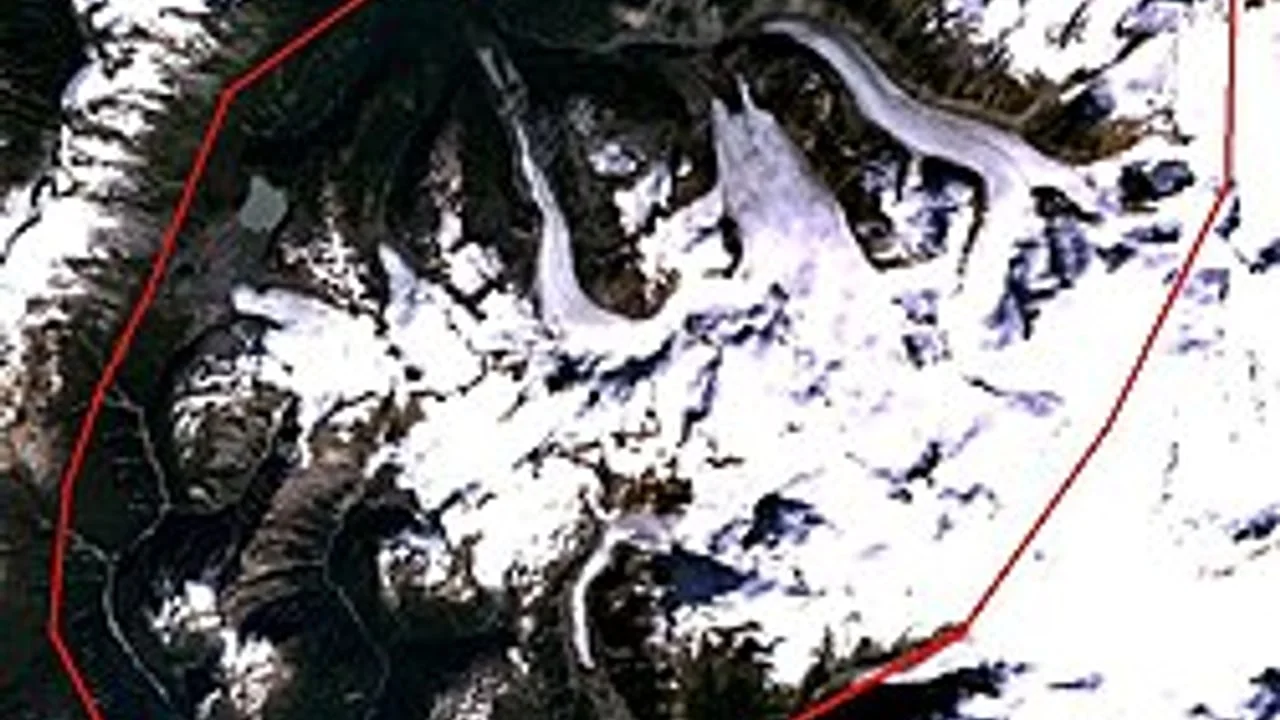
There are no roads to the Silverthrone Caldera. No trails, no visitor center, no webcam relaying a reassuring image of quiet snow-capped peaks. Just a vast ice field in the Coast Mountains of British Columbia, and somewhere inside it, a volcano so large and so poorly understood that scientists still cannot say with confidence when it last erupted — or what it might do next.
Wikipedia's editors chose it as today's Featured Article. It's a fitting pick: a place that rewards curiosity precisely because almost nothing about it is settled.

A hole in the mountains

The Silverthrone Caldera sits in the Range 2 Coast Land District of British Columbia1, roughly 55 kilometres north of the small community of Kingcome, buried within the Pacific Ranges of the Coast Mountains2. Getting there requires a serious expedition. There are no roads of any kind. The caldera lies inside an ice field, fully glaciated, deeply eroded, and comprehensively remote.
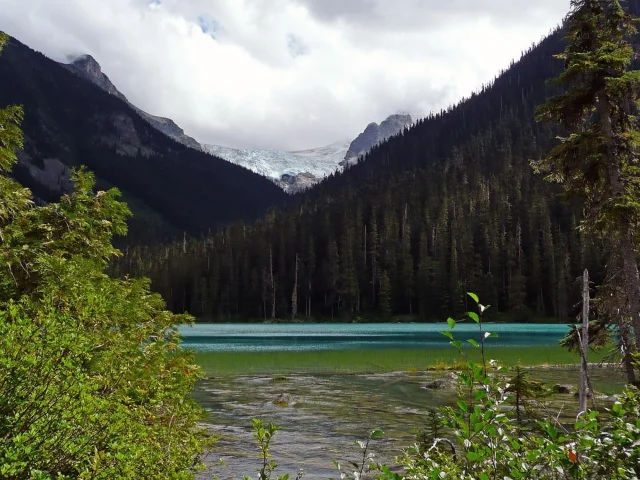
Glaciated peaks and lakes in the British Columbia Coast Mountains — the terrain surrounding the Silverthrone Caldera
The glaciated Coast Mountains of British Columbia — Silverthrone Caldera sits deep inside this terrain, about 55 km north of Kingcome. Photo: Pixabay / ArtTower (Joffre Lake, BC).
What makes it worth the trouble is its scale. The caldera measures approximately 31.6 kilometres long and 20 kilometres wide2 — numbers that put it in the same category as Long Valley Caldera in California, which formed during a VEI 7 eruption 764,800 years ago and deposited ash across much of the western United States. If the geologic inference holds, Silverthrone's caldera-forming eruption was comparable in scale: more than 400 square kilometres of ground collapsed inward, and somewhere on the order of 200 cubic kilometres of material was ejected2.
That would make it likely the largest caldera produced anywhere in the Cascade Mountain Range during at least the past five million years.

When it happened — and why nobody knows

Here is the uncomfortable part: nobody can say exactly when that eruption occurred.
The best estimate is that the caldera formed somewhere between 150,000 and one million years ago2. That is a range wide enough to contain, well, most of human prehistory. Scientists don't know what composition the eruption produced at its most explosive phase, how far the tephra fell, or what the precise trigger was. The volcano's extreme remoteness has made thorough fieldwork effectively impossible since at least the 1960s when geological studies began1.
The rocks that survive are more legible. Three geological units have been identified at the Silverthrone complex1:
UnitApproximate age
Basal breccia~750,000 years ago
Overlying lava flows and domes~400,000 years ago
Youngest lavasLess than 150,000 years ago
The rocks themselves span the volcanic spectrum — rhyolites, dacites, andesites, and basaltic andesites1. In valleys, these outcrops are exposed and measurable. At higher elevations, the glacial ice buries most of the evidence.

Volcanoes shaped by ice

One of the stranger aspects of Silverthrone's story is how much the Ice Age itself shaped it.
Several of the volcanic vents inside and around the caldera erupted not into open air but directly beneath thick Pleistocene ice sheets. The result was a class of landform called a tuya — a flat-topped, steep-sided volcanic edifice that forms when lava hits the underside of a glacier. At least one Silverthrone tuya appears to have erupted multiple times, building up a layered, flat-topped structure over successive events2.
The interaction between volcanism and ice runs through the caldera's entire history. The high-elevation terrain is still largely buried under glacial ice, which both preserves the geological record and frustrates anyone trying to read it.

Signs of a living system

The Smithsonian Institution's Global Volcanism Program lists no confirmed Holocene eruptions from Silverthrone — meaning no eruptions in the last 11,700 years that have been definitively verified3. But the story is not quite that tidy.
Organic material buried beneath one of the caldera's basaltic andesite lava flows was dated to approximately 12,200 years ago2. Crucially, that sample was found below the lava, not directly underneath it — meaning the flow itself likely erupted slightly later, placing it inside the Holocene epoch. The 8.5-kilometre-long lava flow may represent the complex's most recent major event, probably a moderately explosive eruption (VEI 2) that built a cinder cone, launched lava fountains, and sent a river of lava down a valley side2.
On top of that: occasional volcanic earthquakes have been recorded at the complex. Not a lot, and not recently publicised, but they suggest a system that has not fully gone cold.

What a future eruption might look like

The main hazard posed by Silverthrone to the present day is not lava flows reaching populated communities — there are almost none within reach. The primary threat to people is to air traffic: a major explosive eruption at the caldera would inject ash into the flight corridors between North America and Asia1.
The secondary threat is closer to home. The caldera sits on a massive ice field. Any significant eruption would rapidly melt large volumes of ice, generating lahars — volcanic mudflows — that could funnel down river valleys toward Kingcome and the surrounding coastal communities2.
Under the U.S. Geological Survey's threat classification framework, Silverthrone would be rated a moderate threat volcano2.

Nobody is watching

There is a troubling subtext to all of this. A 2024 analysis by Kelman and colleagues assessed the threat posed by active volcanoes across Canada and found a significant problem: not a single Canadian volcano meets the minimum monitoring standards recommended for even a Very Low threat edifice45.
That includes the highest-threat volcanoes — Mount Garibaldi and Mount Meager — and it certainly includes Silverthrone. If the caldera were to enter a period of unrest tomorrow, there is no seismic network dense enough to catch it early, no gas monitoring, no ground deformation tracking capable of providing reliable advance warning.
Canada has 28 active or potentially active volcanoes. Most are understudied. Several, like Silverthrone, are physically inaccessible enough that basic fieldwork has never been completed.

Before Europeans arrived, there was obsidian

Long before any geologist attempted to reach Silverthrone, indigenous peoples of the BC coast already knew what the volcano held.
The caldera was a source of obsidian — volcanic glass formed in rhyolitic eruptions1. Obsidian fractures with a conchoidal edge sharper than most metals, which made it one of the most prized raw materials of the pre-contact world: toolmakers used it for cutting blades, scrapers, and projectile points, and it moved across long trade networks. The presence of Silverthrone obsidian in archaeological sites can, in principle, trace the reach of those networks — a record of commerce and travel written in volcanic glass.
The fact that indigenous peoples were able to access and exploit this remote volcanic terrain, and that this history is written into the Wikipedia article as a primary feature of the caldera, is a reminder that "unexplored" is always a relative term. Scientists began formal studies only in the 1960s. People had been there far longer.

The volcano that is still being written

Silverthrone is not a Vesuvius or a St. Helens — it has no dramatic historical eruption, no city buried under ash, no famous date. What it has is scale, mystery, and a body of evidence that is frustratingly incomplete.
The caldera might have produced the most powerful eruption in the Cascades in the past five million years. Or it might have produced something somewhat smaller. It may have erupted as recently as 10,000 years ago, or it may have been quiet for 100,000 years. Geologists have been working on the problem for decades, and the central facts remain unsettled.
That is, in its own way, more interesting than a solved case. It is a puzzle still open — a mountain-sized question that nobody has yet been able to answer, sitting in the ice at the edge of the Pacific.
正在加载链接预览…

围绕这条内容继续补充观点或上下文。

  • 登录后可发表评论。